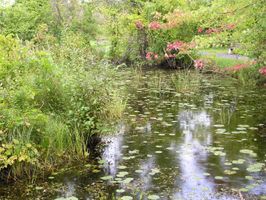
Canada's Wetlands & Our Macoun Design
Did you know that wetlands play a critical role in maintaining balance in nature?
200th Anniversary Celebration!
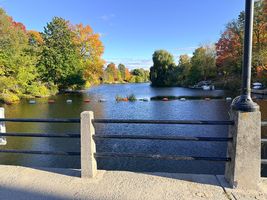
Two hundred years ago, Colonel John By was tasked with a nation building project - before Canada was even a nation. Toiling under imminent threat of invasion from the US, By took just six years to construct a canal linking over 200 kms of rivers and lakes from Kingston to what would one day be Canada’s capital, Ottawa, but was then known as Bytown.
Although the military use for which the Rideau Canal was built never materialized, the infrastructure investment promoted prosperity for generations by encouraging settlement, enabling commercial ventures and promoting trade. Two hundred years later, the walls and locks of the Rideau Canal stand strong and a nation acknowledges the enduring inspiration it offers for a secure and prosperous future.
Did You Know?!
Did you know that Ottawa was known as Bytown until 1855? It was named after Colonel John By who was responsible for construction of the Rideau Canal.
Did you know that a Celtic cross near Major’s Hill Park memorializes the 1000 Rideau Canal workers and their family members who died from injuries and diseases like malaria, smallpox and dysentery?
Did you know that Dow’s Lake used to be a marsh? Work on the Rideau Canal raised the water level to create the lake we know today.
Did you know that, if not for the Rideau Canal, Ottawa would not likely be Canada’s capital?
Did you know that Colonel By’s home once stood in what is now Major’s Hill Park? The name of the park comes from the Major who moved into By’s hilltop home when By returned to England. It became Ottawa’s first park in 1866.
Did you know that Major’s Hill Park is all that stands between the US Embassy and the Rideau Canal which is ironic because US threats of invasion inspired construction of the Rideau Canal.
Did you know that before Canada was even a country, the foundations of a strong nation were laid with the construction of the Rideau Canal? Built as a military supply route for moving goods and people in the event of war, it caused commercial development, trade and settlement to flourish.
Did you know that the Rideau Canal, a UNESCO World Heritage site, is North America’s oldest, continuously used, canal?
Did you know that the Rideau Canal is an early 19th-century engineering marvel with 47 locks linking over 200 kms of rivers and lakes between Kingston and Ottawa?
Did you know that Sir John Franklin, Arctic explorer and leader of the ill-fated 1845 expedition to find the Northwest Passage, laid the first stone of the Rideau Canal?
Did you know that construction of the Rideau Canal took just six years under the watchful eye of Colonel John By and the toil of as many as 5,000 to 6,000 workers each year?
Did you know that the mechanisms used to open and close the locks are called crabs?
Interested in learning more?
Books to read
The Rideau Canal: Then and Now. Ron Corbett. 2007. Magic Light Publishing (Ottawa).
Our Canal: The Rideau Canal in Ottawa. Peter Conroy. 2002. Burnstown, Ontario, General Store Publishing House.
Steamboats on the Rideau. Maureen McPhee. 2023. The Rideau Township Historical Society.
Building the Rideau Canal: A Pictorial History. Robert W. Passfield. 1982. Parks Canada.
Legacy in Stone: The Rideau Corridor. Fiona Spalding-Smith and Barbara A. Humphreys. 1999. Boston Mills Press.
Places to visit
Bytown Museum (Ottawa): Now a museum but originally the Commissariate (1827), a storehouse the Royal Engineers used for tools and materials needed for construction of the Rideau Canal. This is an ideal location from which to view the stepped entrance to the Rideau Canal system.
Merrickville Blockhouse (Merrickville). Built to defend the Rideau Canal, the Blockhouse is now a museum located beside the Merrickville locks.
Watson’s Mill (Manotick). Open to the public, the mill is still operational giving visitors an opportunity to purchase flour milled onsite.
Major’s Hill Park (Ottawa). View a statue of Colonel John By near the location of his former home (no longer standing).
© Joyce Wright